
In a nutshell: LinkedIn thought leadership is when executives consistently share their own point of view on the market. Since the algorithm favors people and buyers trust people more than brands, these profiles build authority, qualified conversations and shorter sales cycles. Thought Leader Ads then amplify the best posts to the right audience.
LinkedIn thought leadership isn’t just a branding play anymore. Today it’s one of the most effective ways to build authority and open doors to new business in B2B.
And there’s a simple reason why: the way people buy has changed.
Before they ever talk to a salesperson, decision-makers have already spent hours researching solutions, following experts and watching who really knows their stuff.
They look at:
- who has a real view of the market
- who shares real lessons learned
- who adds to the conversations that matter
Deep down, they’re trying to answer one simple question: “Who actually gets this problem?”
And the answer rarely comes from a corporate post.
It comes from people.
That’s why more and more companies are realizing something important: their executives can be their most powerful marketing channels.
When leaders share their vision, lessons and opinions about the industry, they build something incredibly valuable: public authority.
And authority brings three things every B2B marketing team wants:
- trust
- qualified conversations
- business opportunities
What is thought leadership on LinkedIn?
Thought leadership is a buzzword that gets thrown around a lot in marketing, often pretty superficially.
Being a thought leader doesn’t mean posting motivational quotes or parroting trends.
It means something much simpler and much rarer: having your own take on the market and sharing it consistently.
A thought leader:
- analyzes what’s happening in the industry
- challenges old-school practices
- shares real lessons learned
- sparks new ways of thinking
They don’t try to sell in every post. Actually, it’s the opposite.
They build so much credibility that the market starts coming to them.
On LinkedIn, that looks like profiles that:
- post regularly
- spark meaningful debates
- attract qualified followers
- become the go-to voice in their niche
When that happens, the impact goes way beyond likes. The executive becomes an entry point for new business.
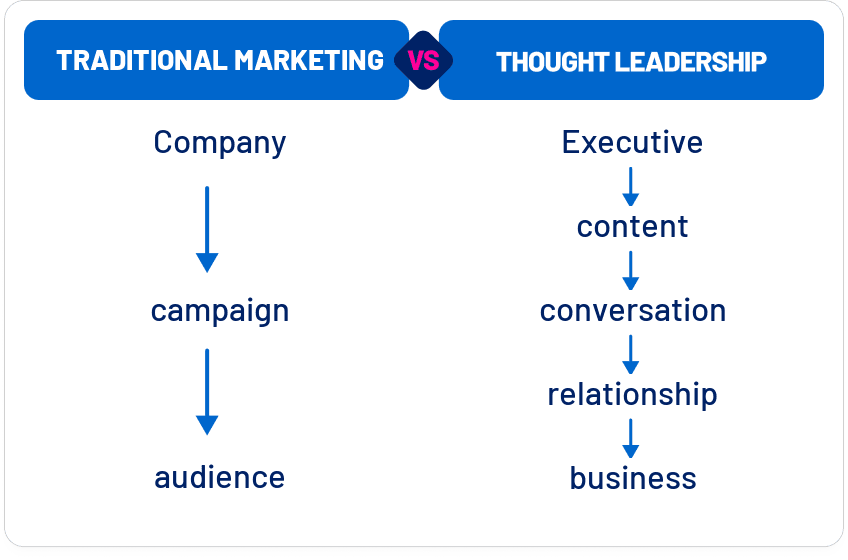
Why executives became the new marketing channels
There’s a quiet shift happening in B2B marketing.
More and more companies are figuring out that their biggest distribution channels are the people who work there.
Especially the executives. And there are three main reasons for that.
1. The LinkedIn algorithm favors people
LinkedIn was built as a professional network. That means it prioritizes interactions between people, not between companies.
In practice, there’s a clear pattern:
Posts from executives usually get much more reach and engagement than posts from the company page.
That doesn’t mean company pages are useless, but it does mean personal profiles are the real content distribution engines on the platform.
2. People trust people
B2B decisions are complex. They involve risk, budget and professional reputation. So trust carries a lot of weight.
When an executive shares knowledge consistently, they build something super powerful: intellectual familiarity.
The buyer starts feeling like they already know that person, even without ever having talked to them.
And when it’s time to buy, that makes all the difference.
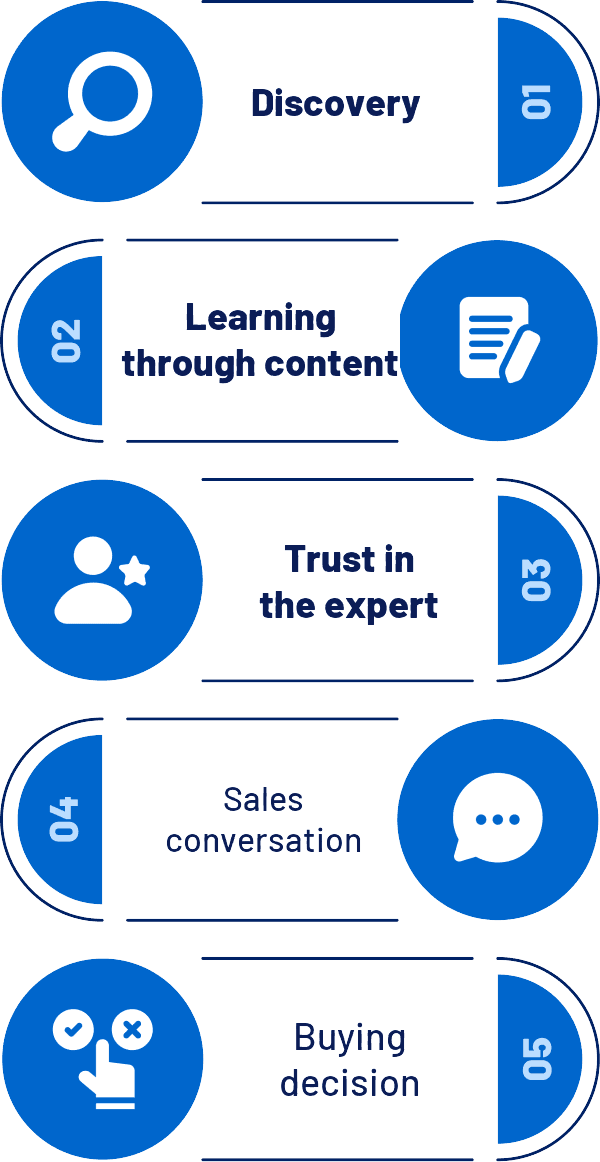
3. Content builds the relationship before the sale
There’s a funny moment that happens in a lot of sales meetings these days. The prospect joins the call and says something like: “I’ve been following your posts on LinkedIn.”
At that point, something big has already happened: part of the sale was made before the conversation even started.
The content created:
- familiarity
- trust
- perceived authority
The result? Way less friction in the sale.
Who should become a corporate influencer?
A common question is: “Does every executive need to create content?”
Nope.
But some profiles are especially strategic.
C-level
CEOs, founders and directors tend to get a lot of visibility. They represent the company’s vision and positioning.
When they talk about market trends, the impact is usually significant.
Technical experts
Profiles like CTOs, Heads of Product and industry specialists bring deep technical credibility.
They help the market understand complex problems, which boosts the perceived value of your solution.
Sales and marketing leaders
These folks tend to be closer to the market, so they can turn content into business conversations more easily.
The sweet spot is to start with 1 to 3 strategic executives.
Once the strategy matures, you can expand it.
How to build a LinkedIn thought leadership strategy
Turning executives into corporate influencers doesn’t happen by accident.
You need a few pillars in place.
1. A profile built for authority
The executive’s profile works like a personal credibility landing page. (Our LinkedIn profile optimization guide covers every section.)
A few things you need to nail:
- a professional photo
- a clear, strategic headline
- a well-structured About section
- Featured content
- a consistent career history
A strong profile makes it more likely that visitors turn into followers, then qualified connections and, finally, business opportunities.
2. Original content with a point of view
This is the heart of the strategy.
Thought leadership isn’t about sharing industry news. It’s about interpreting what’s happening in the market.
Content that usually performs well:
- trend analysis
- lessons from mistakes and challenges
- behind-the-scenes of strategic decisions
- provocative takes on the industry
Posts like these generate something far more valuable than likes: meaningful discussions.
3. Show up in the conversation
Thought leadership isn’t built just by posting. It also means joining the conversations in your industry.
Executives who comment on relevant posts get a big visibility boost.
Write these down:
- comment on experts’ posts
- reply to comments
- jump into debates
- engage with customers and partners
4. Strategic consistency
A lot of people think they need to go viral. In reality, consistency matters way more.
Executives who post once or twice a week are already ahead of most LinkedIn users.
Over time, the profile gains momentum and starts attracting attention (a huge factor in today’s digital marketing).
The real benefits of executive influencers
Done right, this strategy delivers consistent results, like:
- higher brand recall
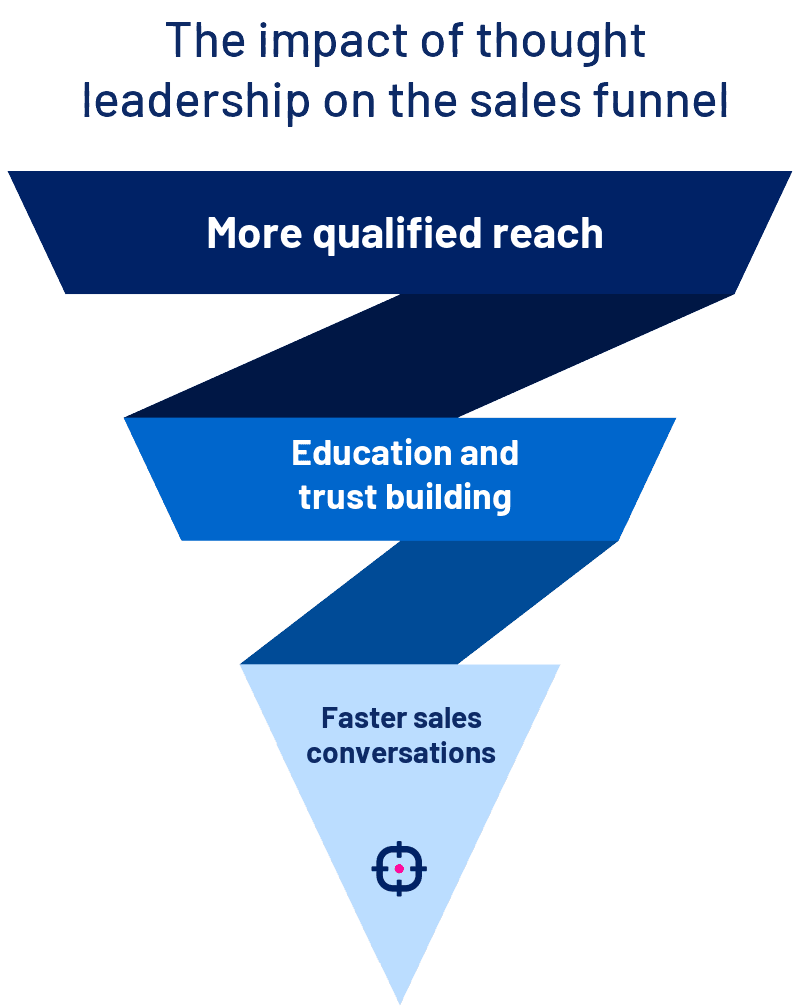
- more qualified conversations with prospects
- shorter sales cycles
- a stronger company reputation
- attracting talent and partners
In many cases, executives start getting invited to events, podcasts and even partnership opportunities.
How to scale it with Thought Leader Ads
Building authority organically is great, but there’s a way to amplify your content’s reach to the right people.
That’s where Thought Leader Ads come in.
What are Thought Leader Ads?
Thought Leader Ads are ads built from posts published by executives.
In other words:
Instead of promoting content from the company page, you promote content from a personal profile.
That makes the message feel much more natural and, a lot of the time, much more effective.
Benefits of Thought Leader Ads
Companies using this format usually see:
- a significantly higher CTR
- a lower cost per click
- longer reading time
- more thoughtful comments
In practice, it’s like influencer marketing, but with your own team.
How to connect thought leadership with demand generation
When you pair it with paid media and a content strategy, executive influence can really move the needle on demand generation.
It usually works like this:
- The executive publishes relevant content
- The content drives organic engagement
- The best posts get boosted with Thought Leader Ads
- The right audience starts following the executive
- Sales conversations start happening naturally
This creates a continuous loop: content → influence → relationship → business
And when the star of the strategy is the founder or CEO, this model ties directly into Founder-Led Growth.
If you want to see how to set this up in practice, check out this article too:
🔗 Read next: How to generate demand with Founder-Led Growth + LinkedIn Ads
Wrapping up
B2B marketing is going through a deep transformation.
Companies that rely only on corporate campaigns are falling behind.
Meanwhile, organizations that build authority through their executives are winning the market’s trust.
Executives who share knowledge on LinkedIn stop being just internal leaders.
They become:
- go-to experts in their field
- relevant voices in the industry
- entry points for new business opportunities
And when you combine that influence with content, paid media and demand generation, LinkedIn stops being just a social network.
It becomes a growth channel for B2B companies.
Frequently asked questions
What is LinkedIn thought leadership?
It’s having your own take on the market and sharing it consistently: analyzing your industry, challenging old practices and sharing real lessons, not motivational quotes.
Which executives should create content?
Start with 1 to 3 strategic profiles: C-level, technical experts (CTO, Head of Product) and sales or marketing leaders.
How often should an executive post?
Once or twice a week already puts an executive ahead of most LinkedIn users. Consistency beats going viral.
What are Thought Leader Ads?
LinkedIn ads built from posts on personal profiles. They usually get a higher CTR, lower CPC and more thoughtful comments.